ISP
ISP CPE & Hotspot Deployment Solution — MossLink Factory
Point-to-multipoint wireless backhaul and CPE distribution for ISPs covering rural and last-mile areas without fiber infrastructure
The Challenge
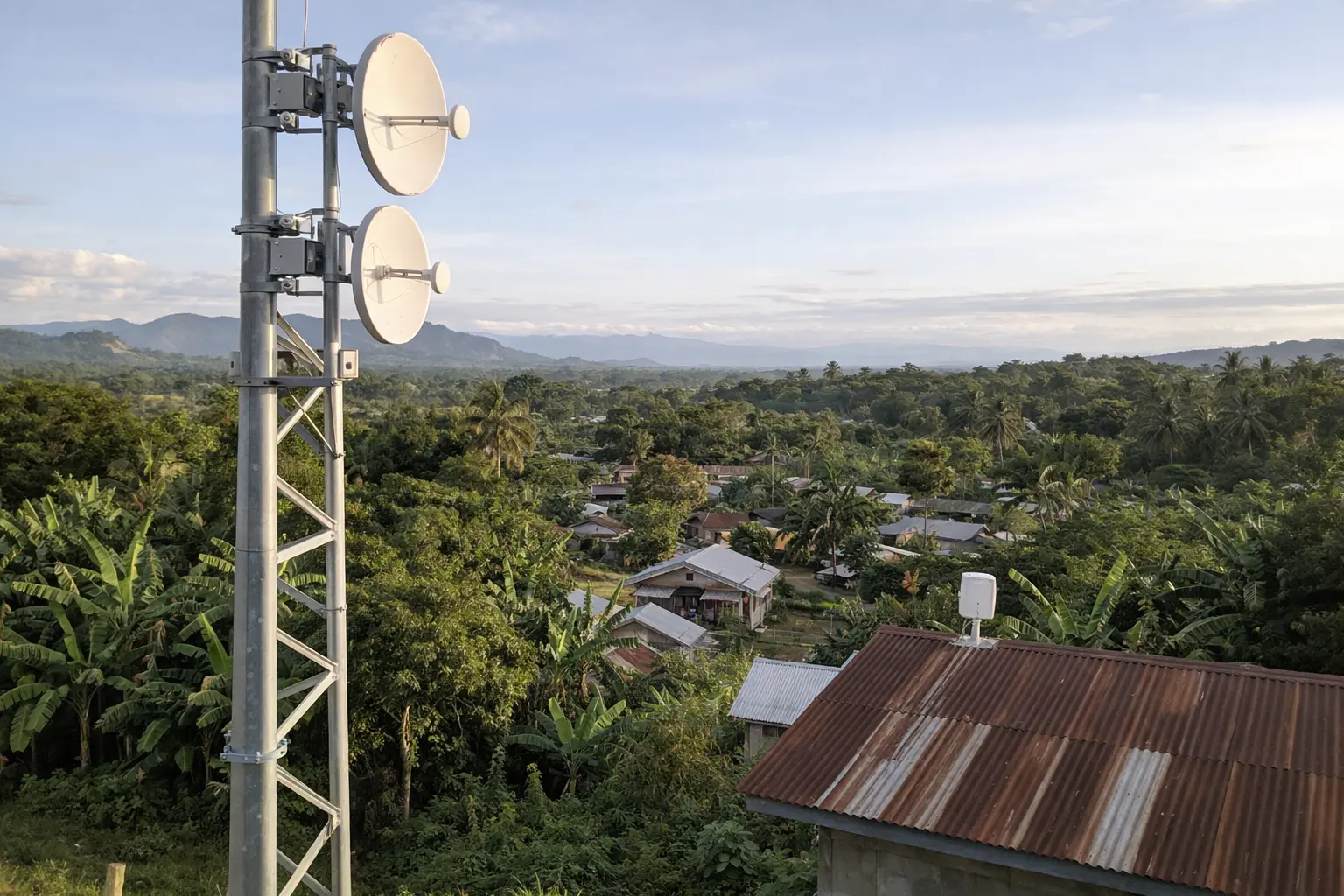
ISPs operating in rural Africa, Southeast Asia, and Latin America face a common obstacle: fiber is economically unviable for the final kilometer to end users. Running cable across mountains, wetlands, or remote villages costs more than the customer base can support.
Network Architecture
Network Architecture
Our Approach
MossLink provides a complete ISP toolkit: long-range PtMP backhaul stations anchor each distribution point, while subscriber-side CPE routers handle last-mile connectivity. Hotspot APs add monetized public Wi-Fi where subscriber density is high.
The Challenge
ISPs operating in rural Africa, Southeast Asia, and Latin America share a fundamental challenge: the economics of fiber simply do not work for the final kilometer. Trenching cable across mountainous terrain, wetlands, or dispersed villages costs far more than the subscriber density can support. Meanwhile, community expectations for internet access are rising rapidly, and government broadband programs are creating both funding opportunities and competitive pressure to deploy quickly.
Traditional wireless ISP solutions often require expensive proprietary hardware, complex management platforms, and skilled technicians for every installation. This makes scaling a rural network prohibitively slow and costly. ISPs need equipment that is rugged, straightforward to deploy, and priced for the margins of developing-market connectivity.
Our Approach
MossLink’s ISP solution is built around a three-layer architecture that matches real-world rural deployments:
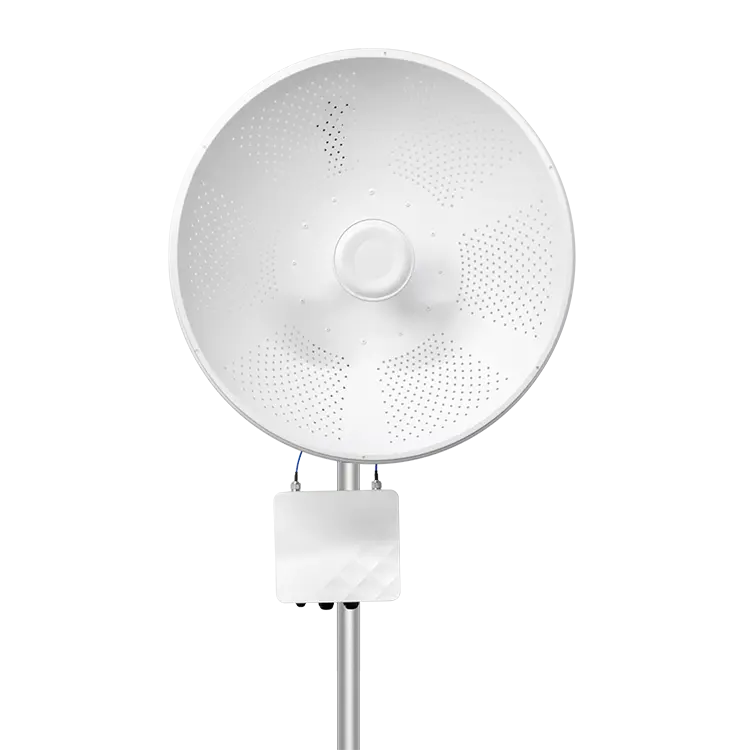
Backhaul Backbone: The WB5axH6-35 wireless bridge anchors each distribution tower. Its 29 dBi high-gain dish antenna and 5 GHz radio form point-to-point or point-to-multipoint backbone links spanning 10–35 km, carrying traffic back to the fiber PoP without laying a single meter of cable. IP67 weatherproofing keeps it operational through monsoons, Saharan dust, and equatorial heat.
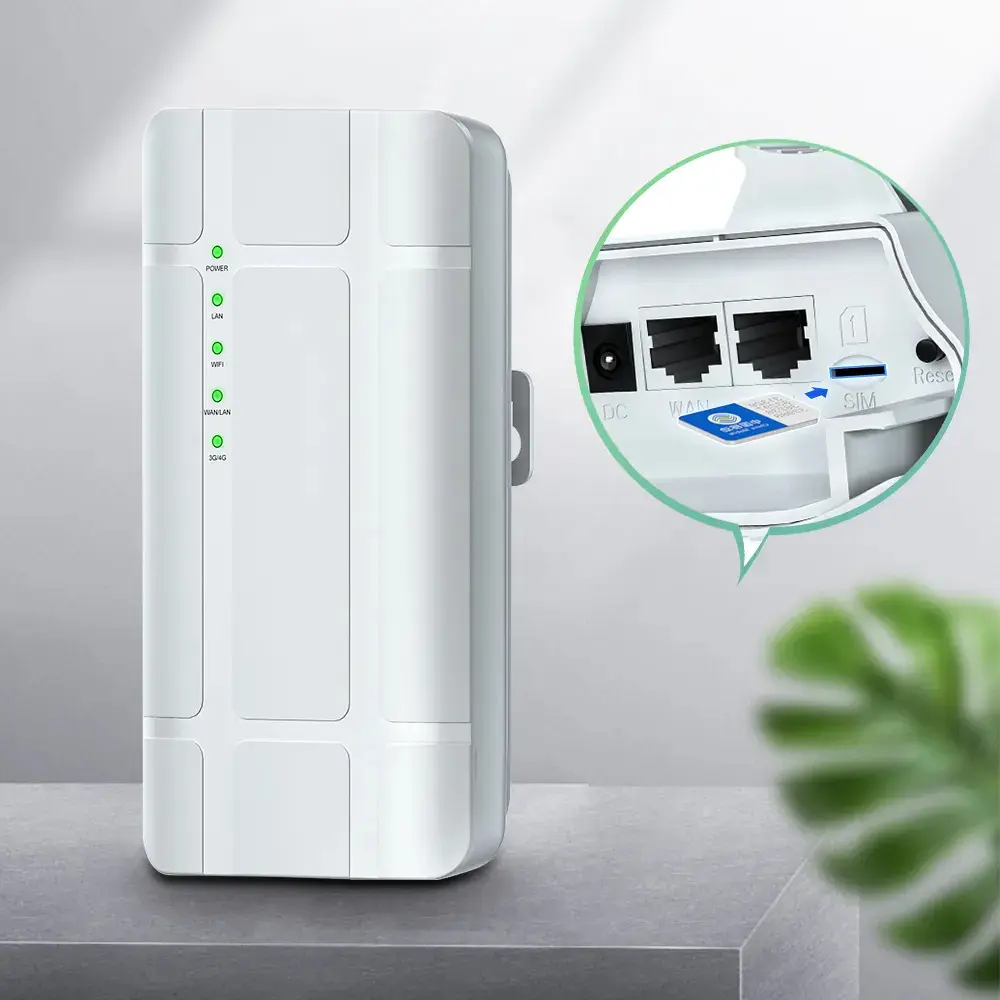
Last-Mile CPE: Subscriber premises receive a YA795 or YC801 outdoor CPE router. These units mount on a rooftop pole, receive signal from the distribution tower, and provide wired and wireless connectivity inside the home or business. The self-alignment LED simplifies installation so subscribers or local agents can set up service without a trained technician.
Hotspot & Revenue Layer: In high-density areas — town centers, markets, bus terminals — the WR3011GP hotspot router enables pay-as-you-go Wi-Fi access through a captive portal with voucher authentication. ISPs generate immediate revenue from casual users while building brand awareness in new service areas.
Core Integration: The WR3005K industrial-grade router, with 6 kV surge protection and support for OSPF and BGP, connects distribution points back to the ISP’s core network. Its dual SIM slot provides cellular backup during backhaul maintenance or outages.
Deployment Architecture
A typical rural ISP node covers a 10 km radius with this structure:
- Tower point of presence — WB5axH6-35 in PtMP mode, pointing toward subscriber zones
- Sub-distribution nodes — WR3005K router aggregates traffic, connects via fiber or WB1500 micro-link to town center
- Subscriber CPE — YA795 outdoor CPE at each premises, self-installed
- Hotspot nodes — WR3011GP at market, school, or clinic for paid public access
This architecture scales linearly: adding subscribers requires only additional CPE units. Expanding coverage means adding a new tower with another WB5axH6-35. No central license servers or proprietary controllers are required.
Results
ISPs deploying MossLink equipment report last-mile coverage reaching 20+ km from a single tower, with subscriber installation times under 15 minutes per site. The elimination of fiber trenching reduces per-subscriber deployment cost by approximately 70%. Hotspot revenue from public Wi-Fi nodes often covers operational costs within the first quarter of service.
MossLink supplies ISP hardware factory-direct from Shenzhen, with OEM firmware customization for private-label branding, custom packaging, and regional certification support. Minimum order quantities are flexible for growing ISPs. Contact our sales team for volume pricing and OEM program details.
Results
- Last-mile coverage extended to 20+ km from a single tower using WB5axH6-35 backhaul
- Reduced last-mile deployment cost by 70% versus trenching fiber to each subscriber
- Subscriber CPE self-installs in under 15 minutes — no technician visit required
- Hotspot voucher system enables pay-as-you-go revenue from day one
- IP67-rated outdoor hardware survives tropical humidity, dust storms, and temperature extremes
- Full routing protocol support (OSPF, BGP) integrates with existing ISP core networks
- OEM firmware and logo customization available for private-label ISP branding
Products Used in This Solution
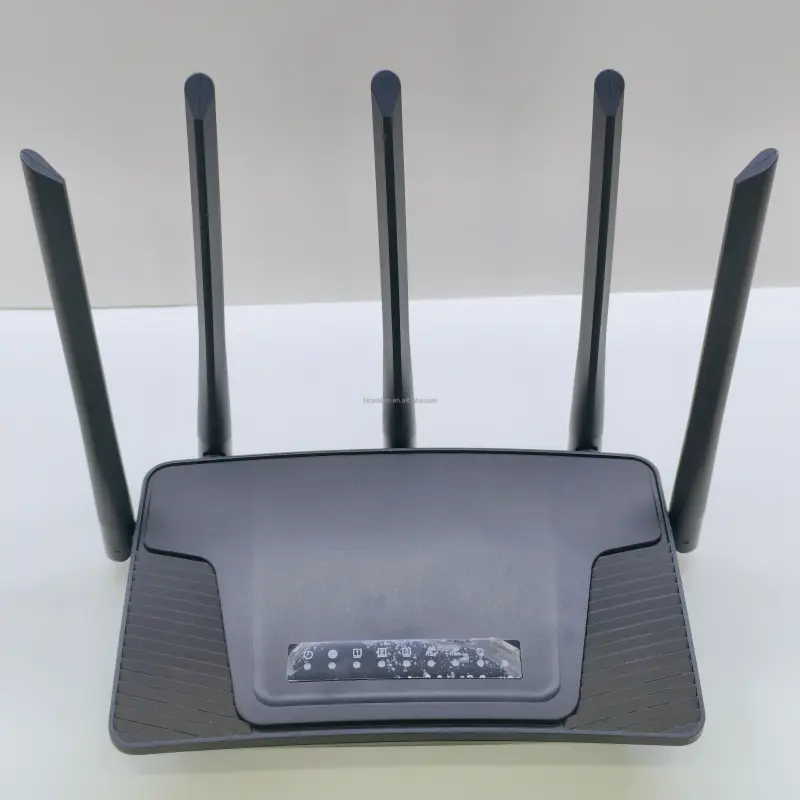
WR3005K Wi-Fi 6 AX3000 Gigabit Router, 6 Antennas, Industrial Protection
WR3005K
Wi-Fi 6 (802.11ax) · AX3000 (574 + 2402 Mbps)
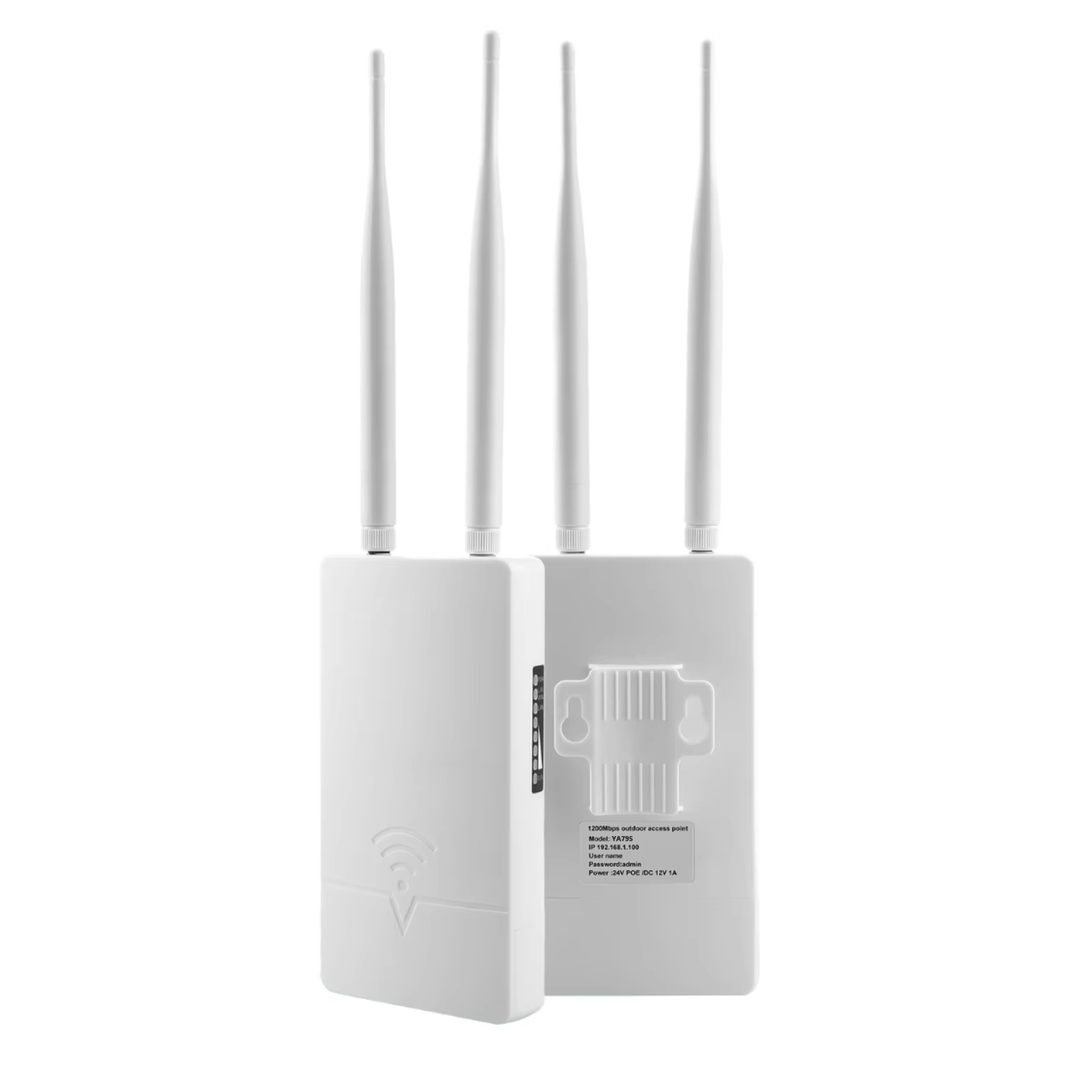
YA795 AC1200 Dual-Band Outdoor Wi-Fi Access Point, IP65, PoE
YA795
Wi-Fi 5 (802.11ac) · Dual-Band (2.4GHz + 5GHz) · AC1200 (300 + 900 Mbps) · IEEE 802.3af 24V PoE (included)
Interested in This Solution?
Let our team design a customized isp networking solution for your project. Get expert guidance and factory-direct pricing.